
If someone was to ask you what The Lion King, Animal Farm, and Finding Nemo all have in common, how would you answer?
You might answer that question by stating that they’re all stories about animals, which isn’t entirely correct; in fact, to think of any of these stories as being about animals is to miss the point of these stories and how they encapsulate the art of storytelling.
We’ll use two of the essential elements of storytelling: the plot and message of the three stories above to examine why there are no good stories about animals; oh and yes, Google confirmed that fish are indeed classed as animals…
The Lion King

The version of The Lion King we’ll be discussing here is the 1994 Walt Disney movie directed by Roger Allers; with the screenplay written by Irene Mecchi, Jonathan Roberts, and Linda Woolverton.
The Plot:
Set in the Pride Lands of Africa, the plot of The Lion King is centred around the young lion Simba, the son of King Mufasa.
Simba’s wicked uncle, Scar, is plotting to usurp the throne on Pride Rock by setting a trap; he persuades the hyenas to help him kill the king and promises them hunting rights in the Pride Lands once he takes the throne.
Scar later lures both Mufasa and Simba into a gorge where the hyenas have driven a large herd of wildebeest into a stampede.
Mufasa manages to save Simba but ends up hanging from the edge of the gorge; he begs his brother for help but Scar throws Mufasa back from the edge down into the stampede of wildebeests where he is trampled to death.
Scar convinces Simba that the event was his fault and tells him to leave and never return. As Simba leaves, drowning in guilt and shame; Scar orders the hyenas to hunt him down and kill him, but Simba manages to escape.
Unaware that Simba survived, Scar assumes the throne of his brother and tells the pride that both Mufasa and Simba were killed in the stampede; and allows the hyenas to enter the Pride Lands.
Simba wanders in exile and later collapses in a desert where he’s rescued by a meerkat and a warthog named Timon and Pumbaa, he grows up alongside these two fellow pariahs in their oasis where they endeavour to live a carefree life.
As an adult, Simba rescues his two friends from a hungry lioness; who turns out to be his childhood best friend, Nala. The two lions fall in love and Nala urges Simba to go back home. She informs him that the Pride Lands under Scar’s reign have become a dry wasteland filled with hyenas.
Still consumed with guilt for his father’s death, Simba refuses to return home.
After doing some soul searching, bumping into Rafiki (the kingdom’s resident mandrill shaman), and seeing his father’s force ghost in the stars; Simba’s advised to learn from the past and stop running from it.
With the help of his friends, Simba returns home to the Pride Lands and confronts Scar at Pride Rock.
Scar manoeuvres Simba to the edge of the rock, taunting him about his role in his father’s death before revealing to Simba that it was him who murdered Mufasa.
Simba manages to corner Scar on the ledge near the top of Pride Rock. Scar begs Simba to show mercy, blaming everything on the hyenas. Simba chooses to spare Scar’s life but orders him to leave the Pride Lands and never return.
Scar attacks Simba who overpowers him and throws him over the ledge to the ground below. Scar survives the fall, but the hyenas who are incensed at his betrayal of them, kill him.
Simba takes his rightful place on the throne with Nala as his queen. The Pride Lands are restored to their former glory.
The Message:
The underlying message of The Lion King is that you need to learn to accept the events of your past to learn, grow and move on with your life; accepting the responsibilities that you’ve been given.
As a cub, Simba wanted to be exactly like his father and he couldn’t wait to be king (hence the annoyingly catchy song), but as events turned and he grew older and harboured the guilt of his father’s death, Simba couldn’t bear the thought of even returning home, let alone being king.
With the help he received from his friends, Simba accepted his responsibility, accepted his past and used it to learn and grow.
He returned home, took his throne and restored his homeland.
Animal Farm

The version of Animal Farm we’ll be discussing here is the 1945 novella written by George Orwell
The Plot:
The story of Animal Farm begins with a group of animals living on the poorly run Manor Farm.
The human farmer, Mr Jones, is a negligent alcoholic who has been mismanaging the farm and mistreating the animals which leads to them stirring up a rebellion.
Old Major the boar holds a meeting of the animals, calling for the humans to be overthrown and for the farm to be taken and managed by the animals themselves.
Old Major dies before the rebellion and two young pigs named Snowball and Napolean assume his place; they stage a revolt which leads to the animals forcing Mr Jones off the farm and claiming it as their own, renaming it Animal Farm.
They also take up the Seven Commandments of Animalism, the foremost of which is that “All animals are equal”.
For a while, the farm runs smoothly, there’s plenty of food and the animals are happy.
The pigs then begin to elevate themselves above the other animals and assume leadership positions; they start setting aside special food items for themselves, claiming them to be for their health.
Snowball suggests modernising Animal Farm and building a windmill; Napoleon disagrees and as the debate becomes heated, Napoleon has his dogs chase Snowball away from the farm and declares himself Supreme Commander.
Napoleon makes changes to the governance of Animal Farm, replacing their group meetings with a committee of pigs to control the farm. Napoleon also takes credit for the windmill idea, encouraging the animals to work harder for the promised easier life to come once the windmill is built.
After the windmill is destroyed by bad weather conditions, Napolean and the pigs convince the other animals that it’s Snowball attempting to sabotage their efforts. They then begin purging the farm of animals accused of working with Snowball.
Gradually becoming more humanlike, Napoleon has a song composed to celebrate his achievements as Comrade Napolean. He then orders a second purge and another group of animals accused of plotting with Snowball are executed by Napolean’s dogs.
After some years, the windmill is rebuilt and another is also built; bringing the farm a decent income. None of the ideals mentioned during the planning of the rebellion ever came to be. Napoleon continually claims that animals living simple lives are happier.
Snowball is long-forgotten, most of the animals that took part in the original rebellion are dead and we discover that Mr Jones is also dead.
By this point, the pigs are very humanlike; they walk on two legs, drink alcohol, wear clothing and carry whips. The Seven Commandments of Animalism have been condensed into the phrase “All animals are equal, but some animals are more equal than others”.
Napoleon restores the name of the farm back to Manor Farm and invites the local farmers for a dinner party with him and the other pigs; when the animals outside the farmhouse look at the pigs and the men, they can no longer tell the difference between them.
The Message:
As well as Animal Farm being a political allegory of the Russian Revolution, there was a prevalent underlying message to the story.
All power contains an element of corruptibility and even those that set out with good intentions can be corrupted by power.
At the start, the animals had grouped together to form a society free of the oppressive regime of humans; this society was built on the seven commandments of Animalism which distanced them from the negative traits and vices associated with humanity.
All of the animals then had the opportunity to live as equals in the utopian setting of Animal Farm.
Once Napolean acquired his power and the pigs took control of Animal Farm, things quickly took a turn for the worse; the pigs became more humanlike, greedy and corrupt, and as a result, more oppressive.
Before too long, the other animals were in a worse situation than that in which they started.
Finding Nemo
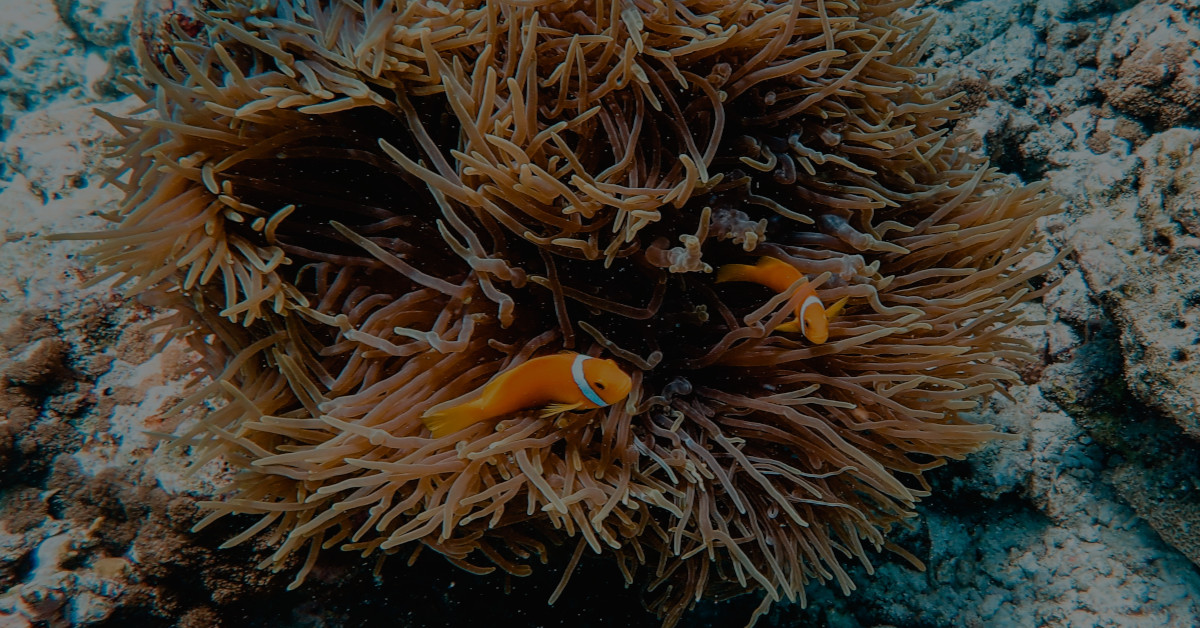
The version of Finding Nemo we’ll be discussing here is the 2003 Pixar Animation Studios movie directed by Andrew Stanton; with the screenplay written by Andrew Stanton, Bob Peterson, and David Reynolds.
The Plot:
This story follows an overly cautious clown fish named Marlin as he cares for his son, Nemo who has a stunted right fin.
Marlin and Nemo live in an anemone in the Great Barrier Reef and sometime earlier Marlin’s wife, Coral, and all but one of their eggs (Nemo) were killed in a barracuda attack.
Because of past events, Marlin is overprotective of Nemo and all the more so because he has a stunted fin that is unusually short in comparison to the others.
On Nemo’s first day of school, Marlin embarrasses him and the pair argue which leads to Nemo swimming too close to the surface to try and prove himself when he is captured by a scuba diver.
Marlin desperately tries to chase the speedboat but fails. He then meets Dory, a blue reef fish who suffers from short-term memory loss.
Meanwhile, Nemo is placed in an aquarium in a dentist’s office in Sydney, Australia. After learning that the dentist’s niece who killed her previous fish is whom he is due to be given to, he and the other fish in the aquarium (identified as the Tank Gang) devise a plan to escape.
Marlin discovers a diver’s mask that fell from the speedboat and after some chaos involving vegetarian sharks and some old naval mines; the mask sinks into a trench, but Dory manages to memorise the address written on the mask and they escape.
The pair receive directions from a school of moonfish but Marlin believes he knows a safer route which leads him and Dory into a forest of jellyfish, whose stings render the pair unconscious.
Marlin and Dory wake up in the East Australian Current alongside a group of sea turtles who relay the news of his quest to find Nemo across the ocean to Sydney where it eventually reaches Nemo.
Encouraged and inspired by his father, Nemo again tries to enact the escape plan and succeeds.
As Marlin and Dory exit the current they’re met by a blue whale; Dory asks the whale for help which results in the whale swallowing them, before later shooting them out through its blow-hole at Sydney Harbour.
After escaping a group of seagulls, Marlin and Dory are taken to the dentist’s office where Nemo is playing dead to save himself; upon seeing him, Marlin believes he is dead. Gill (a member of the Tank Gang) helps Nemo escape through a drain that leads out into the ocean.
A heartbroken Marlin bids farewell to Dory and begins his journey home, his departure triggering Dory’s memory loss.
When Nemo gets to the ocean he meets Dory, but she no longer remembers him or Marlin, her memory is reignited when she sees the word “Sydney” on a drainpipe.
After reuniting Nemo with Marlin, Dory, along with a school of fish is captured by a fishing trawler. With his father’s permission, Nemo enters the fishing net, and he and Marlin help the fish to break the net and escape.
Once they return home, Marlin is more confident and trusting and he and Dory see Nemo off to school.
The Message:
To get to where you need to be, you must learn to trust and let go of the need to control everything.
Throughout the entire story of Finding Nemo we see Marlin trying to control everything from his environment to the actions of others, he also struggles to trust others.
We see the message of the story flawlessly summed up in the scene with the whale as Marlin chooses to literally and metaphorically let go, trust in Dory and the Whale and go with the flow of the water.
The whale then shoots the pair out of its blow-hole and they’re in Sydney Harbour, in very close proximity to where Marlin needs to be in order to find Nemo.
So Why Are There No Good Stories About Animals?
As we’ve seen with the three stories we’ve briefly looked at; despite each of them being an exceptional demonstration of the art of storytelling, the fact remains that they’re just not about animals.
They’re about people.
In fact, any great story you can think of that involves animals or uses animals as characters, is about people.
To summarise the lessons learned from each story’s message:
Learn to accept the events of your past to learn, grow, and move on with your life; accepting the responsibilities you’ve been given.
That message resonates with humans, not lions.
All power contains an element of corruptibility and even those that set out with good intentions can be corrupted by power.
Again, a human-focused message that means nothing to any farm animals, let alone pigs.
To get to where you need to be, you must learn to trust and let go of the need to control everything.
While this is a meaningful and potentially life-changing message, it has no true bearing on the life of a fish.
So just to reiterate and explain the title of this article, while there are countless great stories that involve animals; there are no good stories about animals because ultimately, they’re about us.
Humans.
If they weren’t about us, they wouldn’t resonate with us, we wouldn’t connect with them, and we certainly wouldn’t think of them as great stories.
Explore The Art Of Storytelling. Unlock Your Inner Storyteller.
Join me in exploring the art of storytelling; a community dedicated to discovering new worlds, stories and techniques for capturing a narrative, creating moments and bringing stories to life.
Our journey will lead us through film, art history, and literary classics as we study story craft masters old and new; analyse the greatest stories ever told, and use what we learn to develop our own craft and knowledge of story structure.
The art of storytelling will enable you to captivate and engage your audience whether you’re an artist, writer, or neither.


We need a good story teller who loves animals
LikeLiked by 1 person
I believe there are plenty who do, look at Rudyard Kipling as one prime example.
LikeLike